About damp basements on Perth sand
A damp basement in Perth can usually be made dry and usable, but the right fix depends on where the water comes from. Moisture held in sandy ground moves into concrete walls and slabs, bringing musty smells, mould and white salts. Matching treatment to that source is what keeps the room dry.
White salts and musty smells
White deposits on basement walls are efflorescence: salts carried through the concrete by water and left behind as it evaporates. They show moisture is passing through the wall, not sitting on the surface. Mould and a stale smell point the same way. Brushing the salts off removes the sign, not the cause.
A dry room you can actually use
Once moisture is under control, a basement or undercroft can hold storage, a gym, a games room or carpet without the smell creeping back. The planned finish matters, because carpet and timber floors need a much drier slab than bare concrete or tiles.
Why the side of the wall shapes the decision
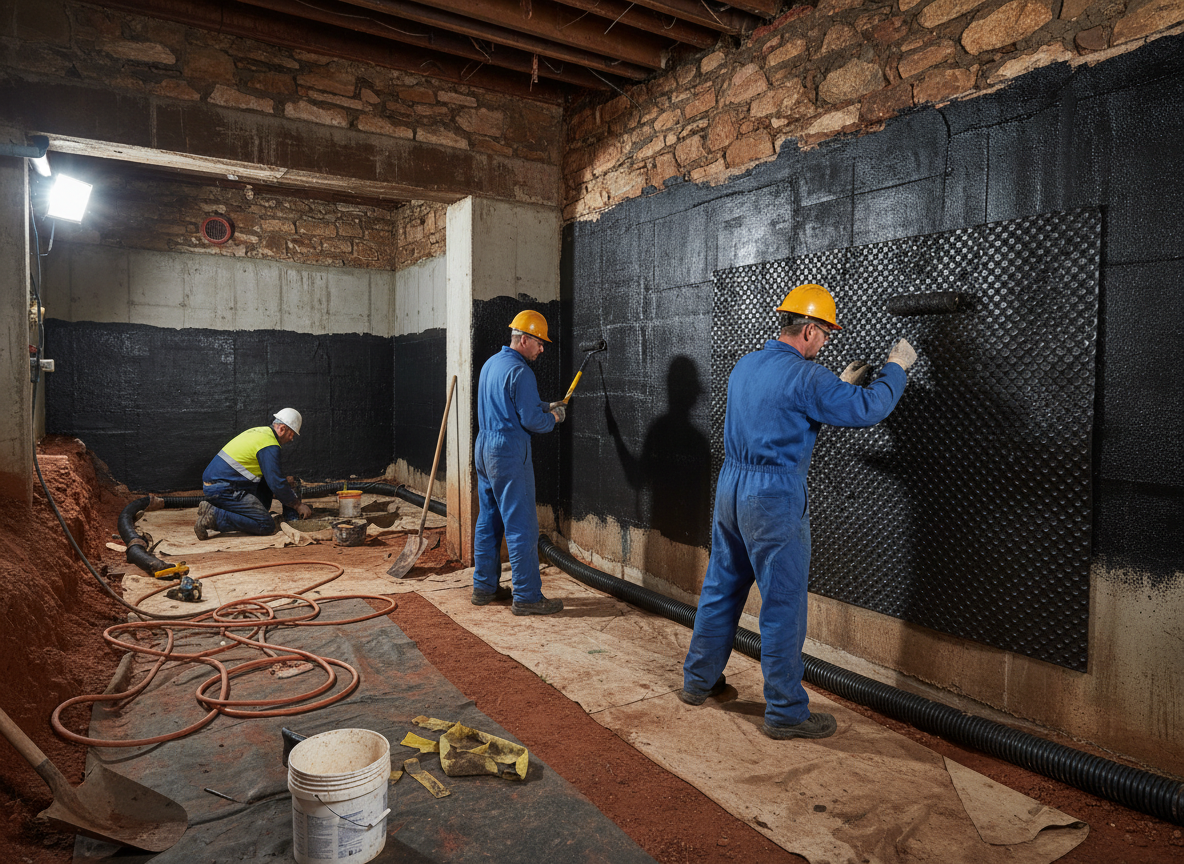
Positive side treatment puts a waterproofing membrane on the outside face, where water arrives, and usually needs excavation. Negative side treatment works from inside the room, holding back water already pushing through. For existing Perth basements and retaining walls, working from inside is often the practical choice.
Concrete and membrane: will a clear sealer do?
A clear sealer can reduce dusting and surface staining, but on its own it rarely stops water pushing through a below-ground wall or slab. Persistent damp generally calls for a system built to resist water pressure, applied to properly prepared concrete, with any drainage problem fixed alongside it.
Why damp can show up in summer
Basement damp does not always follow the rain. Soil moisture lags behind the weather, garden reticulation keeps sand wet against walls, and warm humid air condenses on cool below-ground concrete. A wall that looks worse in February may be a condensation, reticulation or plumbing issue rather than winter groundwater.
Permits, plumbing and contract points
Larger basement work may need a building permit from the local council unless it is exempt, and exempt work must still meet building standards. Drainage or plumbing changes belong with licensed professionals. Where the Home Building Contracts Act covers the job, the deposit cannot exceed 6.5%.
Your next step for a damp basement
Note whether the space is a basement, undercroft or slab on ground, where the damp appears (wall base, floor, corners or the full wall), whether it changes with rain or reticulation, and your suburb. Plans for carpet or timber flooring are worth adding, as they decide how dry the slab must be.
Basement Waterproofing Services We Offer
✓Basement Wall Treatment
Waterproofing for below-ground walls showing damp, salts or mould, from inside or outside depending on access.
✓Undercroft Waterproofing
Treatment for partly below-ground spaces under a house, where soil sits against one or more walls.
✓Slab Moisture Control
Barrier coatings for concrete slabs drawing moisture up from the ground, often before new floor coverings.
✓Below-ground Retaining Walls
Membrane work where a retaining wall forms part of a room and soil moisture pushes through it.
How it works
- 1
Find where the water enters
The walls, slab, joints and surrounding drainage are checked to separate groundwater, reticulation, plumbing and condensation, since each needs a different response.
- 2
Prepare the concrete
Salts, old coatings and loose material are removed and cracks repaired, so the treatment bonds to sound concrete rather than a weak surface layer.
- 3
Apply the chosen system
A membrane or coating suited to the side of the wall being treated and the slab moisture level is applied, with extra attention to corners and wall-to-floor junctions.
- 4
Cure and check before finishing
The system is left to cure as the product requires, and the slab is checked again before carpet, timber or other finishes go down.